

Tracking Uganda’s Gentle Giants in Their Pristine Rainforest Home
Bwindi Impenetrable National Park in south-western Uganda is one of the best places in Africa to go gorilla trekking
. As a UNESCO World Heritage Site, it’s home to nearly half of the world’s remaining mountain gorillas, making it an outstanding chance to encounter these wonderful animals deep within their rainforest home.
Bwindi is unique in a way that it has two great Apes harmoniously living together in the same habitat that is the Mountain Gorillas and the chimpanzees.
Bwindi was established in in 1991 and officially recognised as a UNESCO World Heritage Site in 1994 for biodiversity preservation originally Bwindi means a place of darkness in Rukiga, named after the dense canopy.
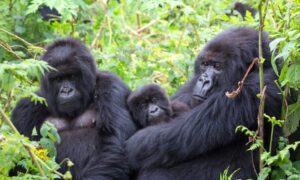

How to Track Gorillas in Bwindi?
Gorilla trekking is an escorted excursion guided by Uganda Wildlife Authority (UWA) rangers. Excursions start with a briefing and then proceed on foot through thick jungle to find a habituated gorilla group. Trekking Time goes for 2–6 hours depending on the movement of gorillas
viewing Time is one hour with the gorillas
One has to be physically fit with a good and reputable health record before carrying out this activity.
One has to dress in long trousers, hard-wearing trekking boots, bring insect repellent, and take a rain jacket as the weather is unpredictable it might rain or shine.
Gorilla Trekking Sectors in Bwindi; these are places where you can view the gorillas in Bwindi
The park is divided into four sectors, and each one has something unique in trekking:
- Buhoma Sector (North) – Totally accessible, perfect for beginners, with community walks.
- Ruhija Sector (East) – Birding paradise with panoramic scenery of the forest.
- Rushaga Sector (South) – Most habituated families and gorilla habituation experiences.
- Nkuringo Sector (Southwest) – Tough hikes but breath-taking views over the Virunga Volcanoes.
Wildlife of Bwindi
Apart from gorillas, the park is highly biodiverse:
11 primate species – chimpanzees (however they are not open to tourism), L’Hoest’s monkeys, black-and-white colobus ,120 mammal species forest elephants, bushbucks, giant forest hogs ,350+ bird species 23 Albertine Rift endemics for example the African green broadbill that is always endemic to Uganda and only found in Ruhija Sector of Bwindi. Butterflies, orchids, and scarce medicinal plants.
Accommodation in Bwindi
Bwindi offers a choice to cater to every budget ranging from Luxury; Clouds Mountain Gorilla Lodge, Buhoma Lodge, Gorilla Safari Lodge. Mid-Range: Ruhondeza Lodge, Silverback Lodge, Gorilla Mist Camp. Budget/Camping: Nshongi Camp, Bwindi Backpackers,
community-run campsites
These accommodation facilities are found in different sectors of Bwindi and one can choose their accommodation according to the allocation of their gorilla trekking permits.
Gorilla Trekking Permit Fees in Uganda as of 2026 according to the UWA tariff
- Foreign Non-Residents: USD 800
- Foreign Residents: USD 700
- East African Citizens: UGX 300,000
These are booked in advance because of the high demand of this activity at least 6 months in advance for high season (June–September, December–February).
Some of the Gorilla Families in Bwindi.
These are headed by dominant silverbacks, families include females,
juveniles, and infants. These live in groups and members are identified by names and markings on their bodies. For exampleMubare (Uganda’s first habituated family), katwe, Habinyanja, Binyindo and Rushegura in Buhoma Sector these family names are created according to the gorilla behaviours or location during habituation.
Rangers play a crucial role in gorilla trekking,
- Ensuring visitor safety during treks,
- Tracking and locating gorillas
- Enforcing rules to protect the gorillas preventing poaching and illegal activities
- Educating visitors about conservation.
You might see them with rifles during your trek they will be part of you to render protection in case any wild animal charges or even encounter of the wild elephants
Some of the Dos and Don’ts of Gorilla Trekking
Dos:
- Keep 7 meters’ distance from gorillas however this depends on the terrain where you encounter the gorillas. On the steep slopes you might come closer for clear views and photographs
- Wear a mask during the encounter because these gorillas might contract our diseases as we are closely related to them
- Follow ranger instructions
- Speak quietly and move calmly
- Bring water and snacks
- Photograph without flash
Don’ts:
- Don’t touch gorillas
- Avoid making sudden movements or loud noises
- Don’t litter
- Don’t visit if ill
- Don’t encircle or pin the gorillas
Some of the core reasons why you must visit Bwindi for Gorilla Trekking.
- World’s most habituated number of gorilla group
- Less economic than Rwanda’s USD 1,500 licenses
- Rich mix of wildlife, culture, and adventure
- Located near Lake Bunyonyi and Queen Elizabeth National Park
When to Visit Bwindi
- Dry Seasons: June–September, December–February (optimal conditions for trekking)
- Wet Seasons: March–May, October–November ( evergreen landscapes, fewer visitors)